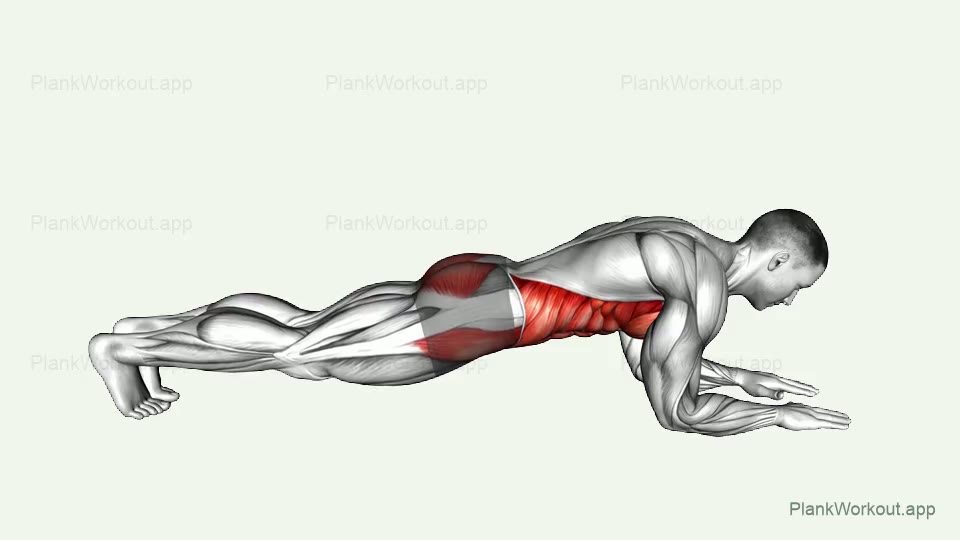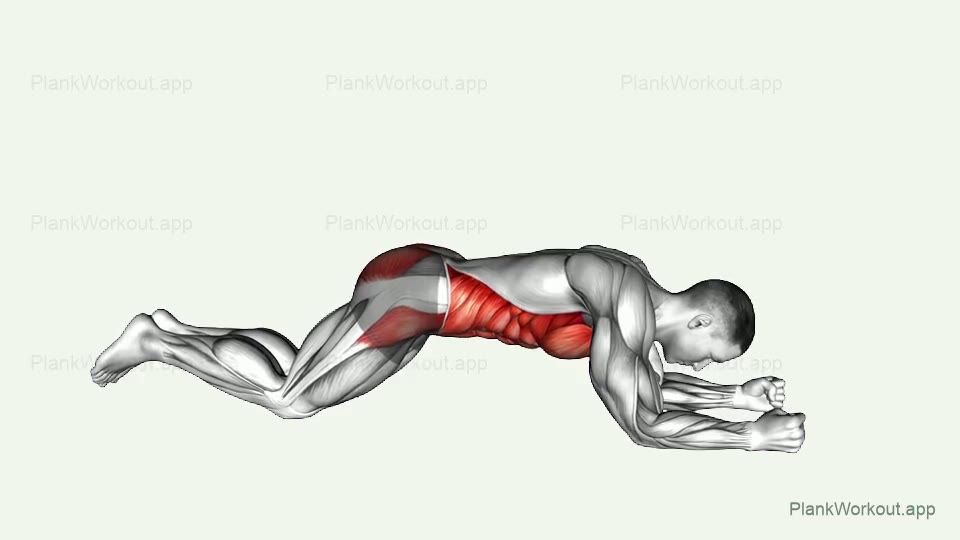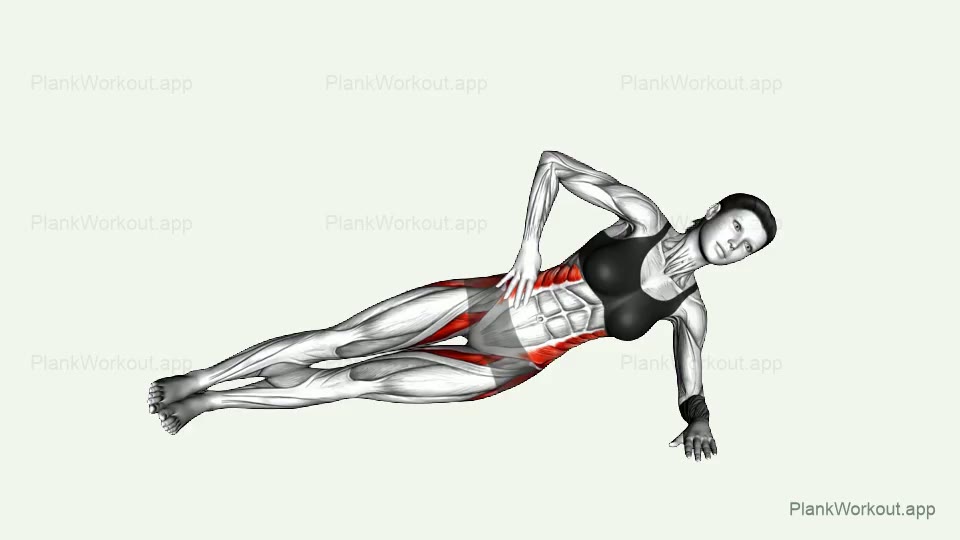
A side plank changes the direction of the challenge: you support yourself sideways while trying to keep the trunk aligned. It deserves its own learning time. Being comfortable in a front plank does not mean your first side plank needs to last just as long.
Build the position
Lie on one side and place your elbow beneath your shoulder. Begin with bent knees if needed. Push through the supporting forearm and raise your hips until your trunk is aligned. Keep your chest facing forward instead of rotating down toward the floor.
Choose the right support
Bent knees make a useful starting version. For a longer lever, straighten your legs; a staggered foot position can give a wider base than stacked feet. Put your free hand on your hip while learning. Adding a raised arm or leg is optional and should not come before a stable base.
Give both sides a turn
- Start with a short interval on the first side.
- Rest and reset before changing sides.
- Use the same planned interval on the second side.
- If one side loses control sooner, use that shorter interval for both for now.
Keep the shoulder comfortable
Avoid collapsing into the supporting shoulder or forcing a longer hold after your hips start dropping. End the set deliberately by lowering your hips. Stop if there is joint pain. In the app, left and right side planks are separate rounds so both sides receive a turn; check the displayed side before you begin. Track each side's control as well as the timer.
Sources & further reading
General fitness education, not individualized medical advice. Stop for pain or dizziness; seek qualified advice if symptoms persist or you have an injury.