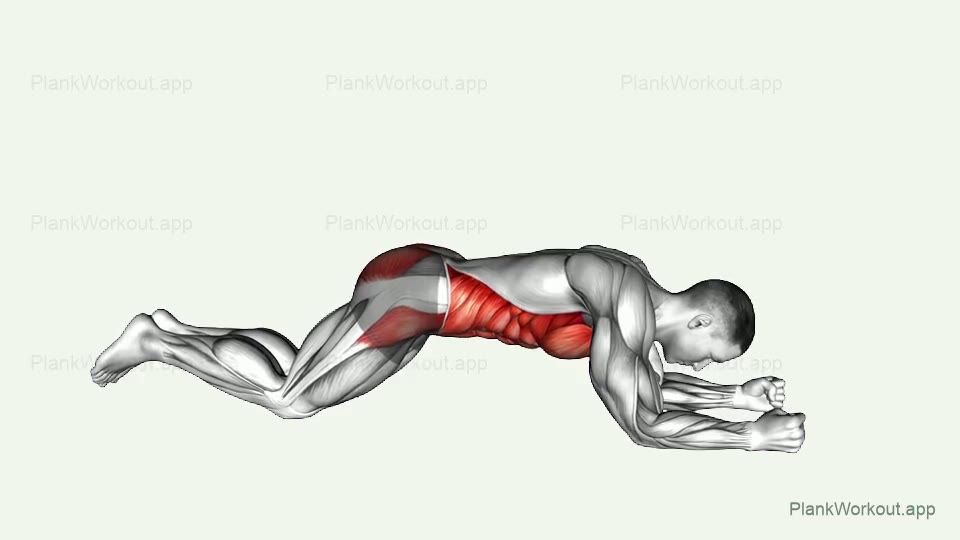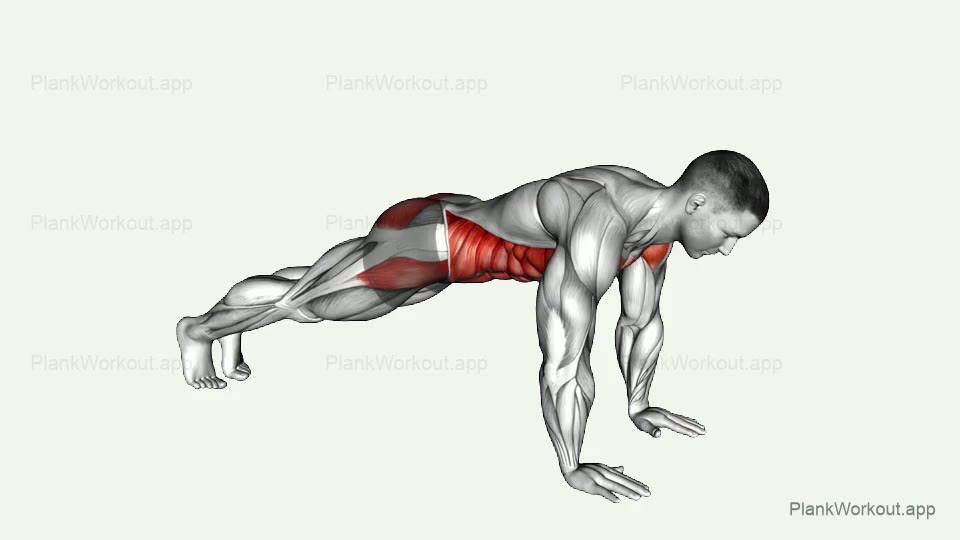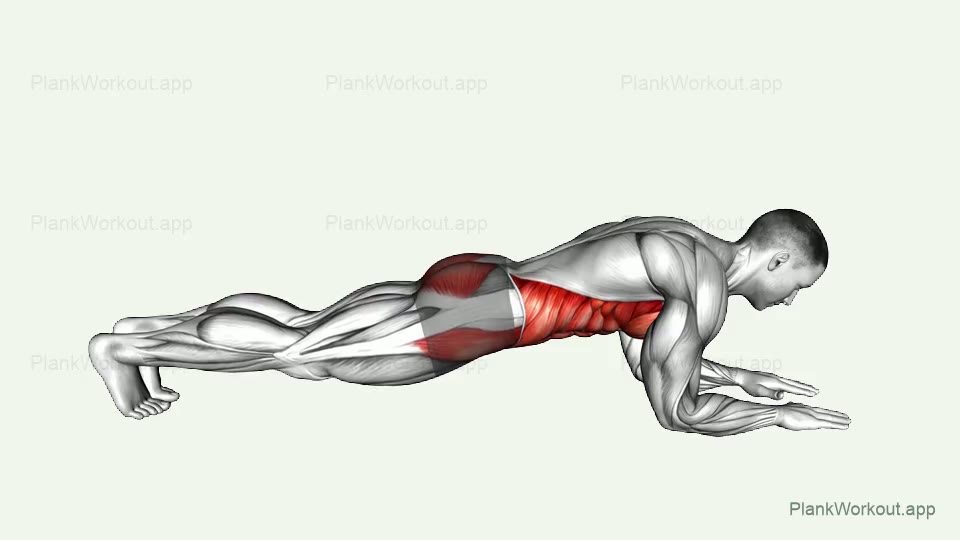
A good plank is a position you can control while breathing. Before chasing a longer timer, learn to enter the position, keep it steady, and leave it deliberately. You need a stable floor and enough space to stretch out.
Set up from the ground
Place your forearms on a mat with elbows under shoulders. Extend one leg, then the other, and support yourself on your toes. Keep your head in line with your trunk and look at the floor. Gently tighten your abdomen and thighs without squeezing so hard that you stop breathing.
Use a three-point check
- Shoulders: press through the forearms instead of sinking between them.
- Hips: keep them in line with your shoulders and heels, without lifting or sagging.
- Breath: keep air moving throughout the hold; the timer should not distract you from this.
Make your first set a rehearsal
Try a short hold, then lower your knees before relaxing your trunk. After resting, repeat the setup from the beginning. A side-on recording can help you compare your first and last seconds. Count only the time you can maintain the intended position.
Know when to finish
If your hips repeatedly drop, your neck strains, or you cannot breathe normally, end the set and use a shorter interval or a knee-supported version next time. Stop for pain rather than trying to correct it under load. In PlankWorkout, preview the movement before starting and pause whenever you need to reset.
Sources & further reading
General fitness education, not individualized medical advice. Stop for pain or dizziness; seek qualified advice if symptoms persist or you have an injury.